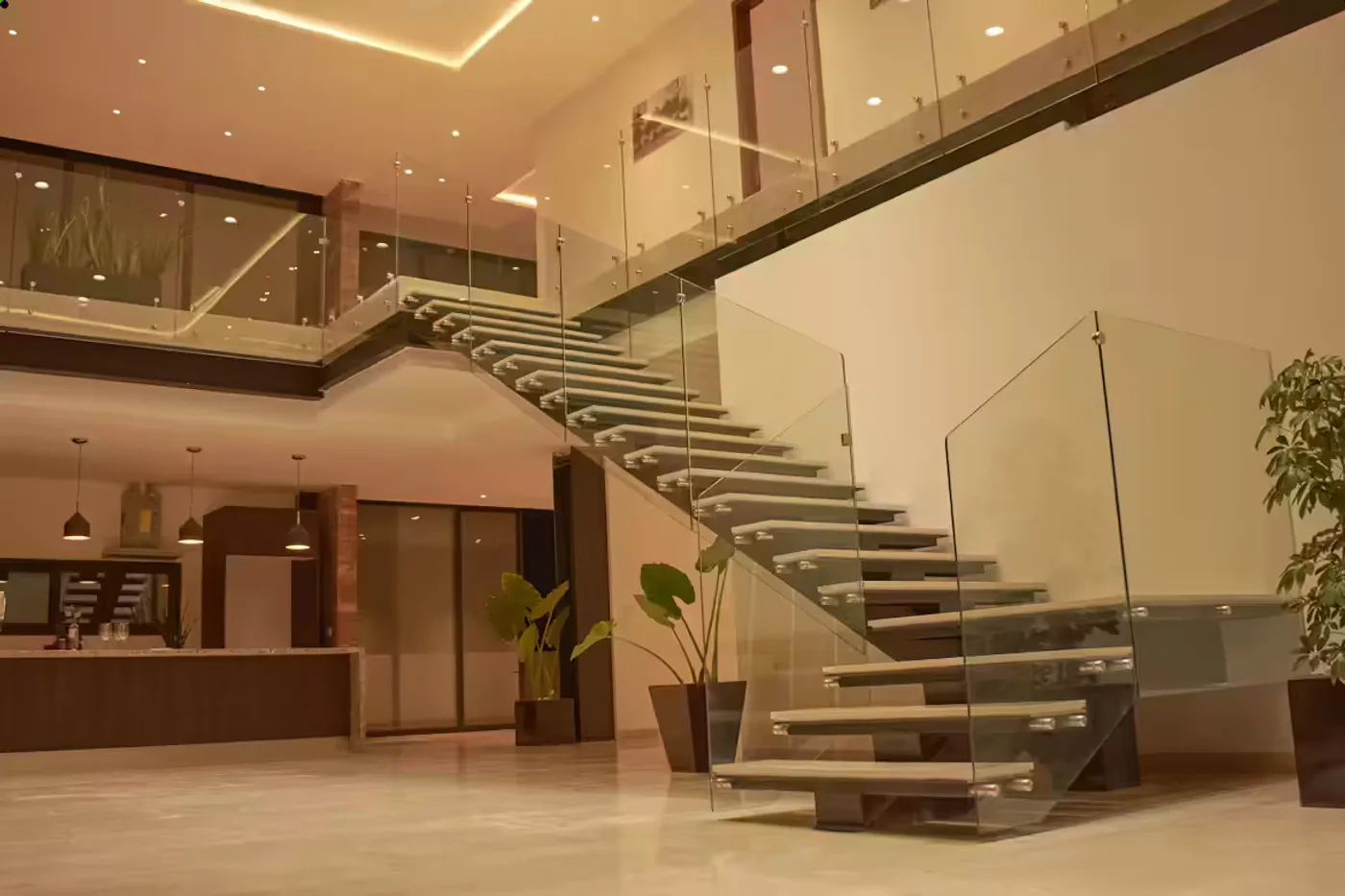
Wood Tread Options for Your Floating Staircase on Long Island, NY
The structure is laser-cut steel. The difference you feel and see is the wood you choose — species, grain, hardness, and finish all determined by your home and how you use it.
At Hempstead Floating Stairs , every floating stair we build uses a laser-cut steel structure — fabricated in our shop, delivered finished, and installed without on-site welding or grinding. The wood tread is what goes on top of that structure. This page is about that choice: which species, what grain, how thick, and how it holds up on Long Island's climate over time.
Nassau County's climate creates a humidity range that most hardwood suppliers don't account for. Outdoor relative humidity in August can run 75 to 85 percent along the coast. By February, forced-air heating drops interior humidity down to 20 to 30 percent. That 50-point swing is what causes gapping between treads and stringers, squeaking at anchor points, and surface checking in species that weren't properly prepared. Kiln-drying to 6 to 8 percent moisture content before shipping gets us partway there — but on-site acclimation to your home's interior conditions is what closes the gap.
We require a minimum 72-hour acclimation period for all hardwood treads before final attachment. Treads are delivered to the interior space, stacked with spacers for airflow, and left to reach equilibrium with your home's actual humidity level. This step adds time to the schedule, but it's the difference between a stair that stays tight through year two and one that develops a 1/8-inch gap at every tread by the following winter.
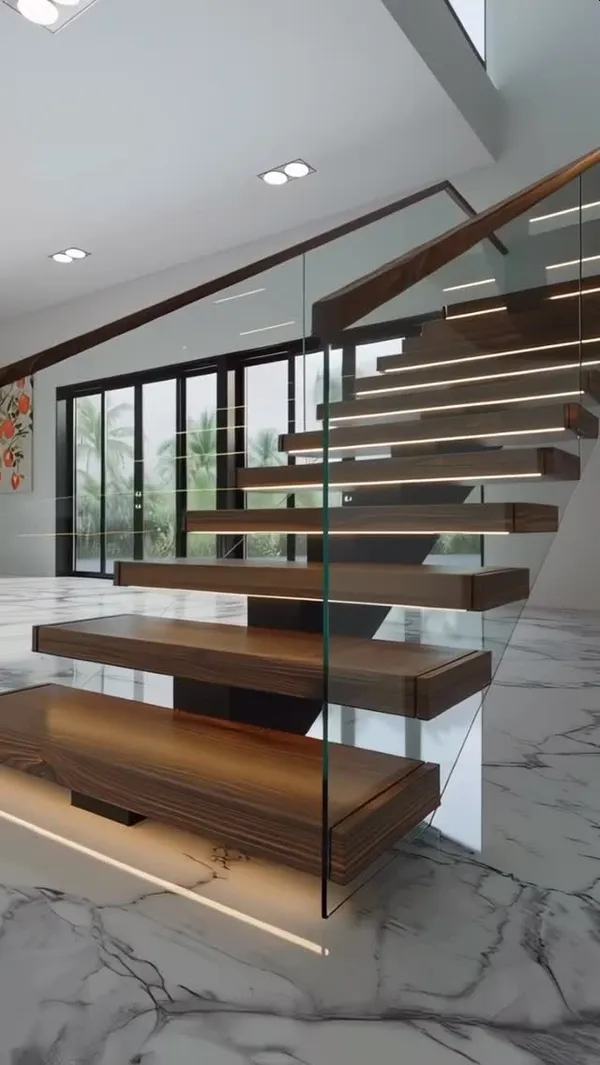
White oak is the most common choice in Nassau County for its Janka hardness rating (1360 lbf), straight grain character, and compatibility with the muted, natural palettes common in renovated colonials and new construction. Walnut reads warmer and darker — popular in contemporary interiors with lighter walls and concrete or tile floors. Ipe is specified when the stair extends outdoors or runs through a sunroom with heavy UV exposure — its natural oil content and density of 3680 lbf make it one of the few domestic species that performs well in partially conditioned spaces.
Attachment method matters for both performance and appearance. We use concealed side-mount clips or hidden threaded inserts — never face-screwed attachment that leaves visible fasteners across the tread surface. The mounting method is chosen based on the stringer profile and tread thickness to ensure the connection is rigid without creating stress points that accelerate seasonal movement.
Finish selection affects both maintenance and moisture response. A penetrating oil finish allows the wood to breathe with humidity changes; a hard film finish like polyurethane creates a vapor barrier that locks in a moisture content level. We discuss the trade-offs with every client and apply the finish specified — not defaulting to whatever is easiest to spray.
Ready to get started?
We'll review your Nassau County project and provide a detailed proposal within 48 hours.
- ✓ Licensed & Insured in New York
- ✓ Nassau County Permit-Ready Documentation
- ✓ On-Time Completion Guarantee
- ✓ Site Assessment
How We Deliver Premium Hardwood Floating Stairs
Wood Tread Selection — FAQ
Why do hardwood floating stair treads gap in Long Island winters?
What wood species hold up best for floating stairs in Nassau County?
Can I match my existing hardwood floor species to the stair treads?
How thick should floating stair treads be?
What does wood tread selection add to the cost of a floating stair system?
Choose Your Wood — We Handle the Steel and the Install
Site assessment. Species samples at the visit. Itemized proposal within 72 hours.