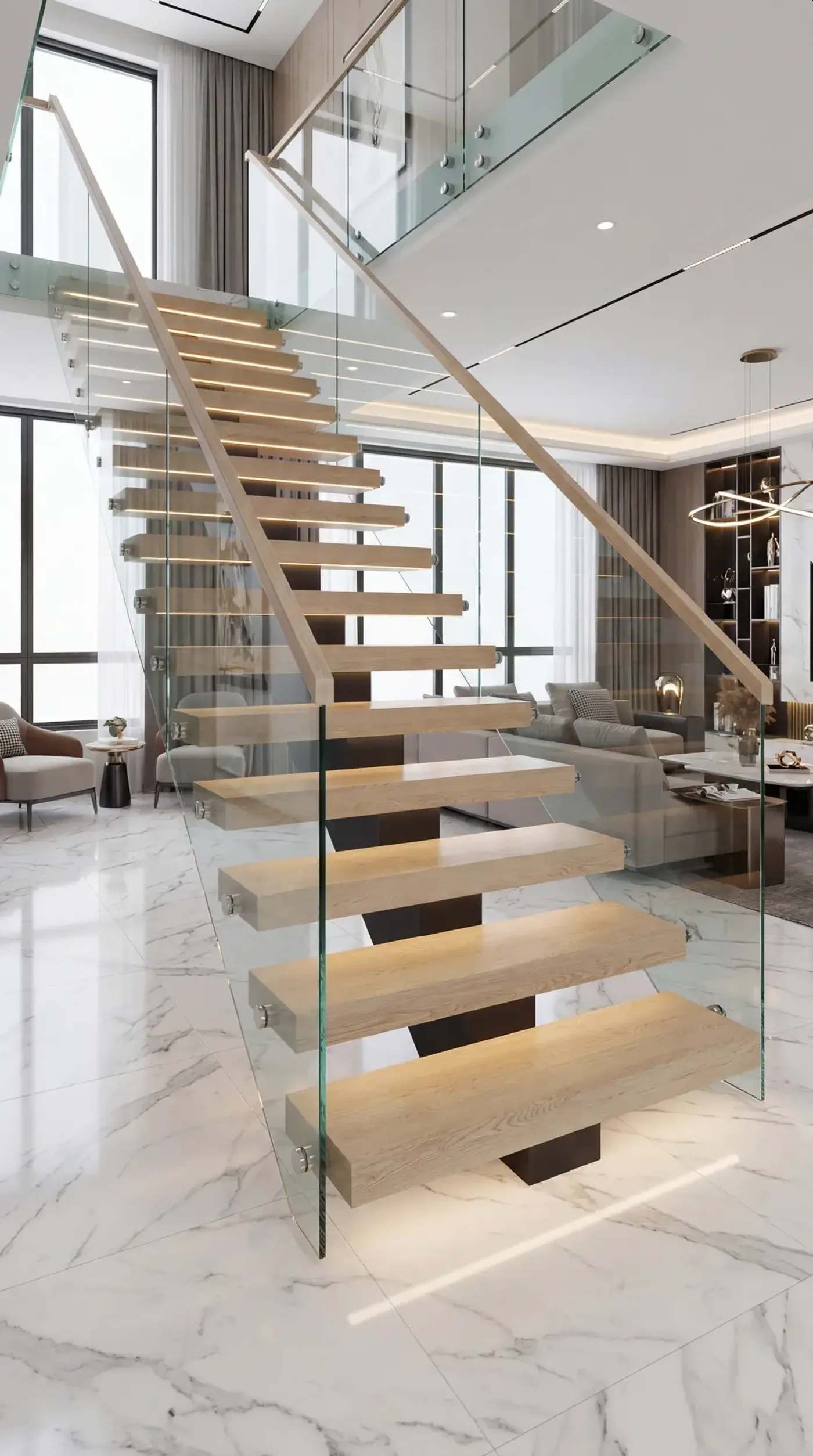
Glass Tread Cantilevered Systems in Hempstead, NY
PVB interlayer laminated glass treads with marine-grade hardware — built to New York Building Code and Long Island's coastal conditions.
At Hempstead Floating Stairs , glass tread cantilevered systems are specified with Long Island's climate and New York Building Code requirements in mind — not adapted from generic catalog builds.
Glass tread panels for cantilevered applications must be laminated with a PVB (polyvinyl butyral) interlayer between two tempered lites. This construction means that if a panel cracks under impact, the interlayer holds the pieces in place rather than allowing a free fall through an open tread. Nassau County Building Department and the New York State Building Code both require this laminated construction for walking surfaces, and we don't install anything that doesn't meet that standard.
Tread thickness is calculated based on span width and the live load requirements under NYBC Section 1607. For most residential applications with a tread span under 36 inches, 1-1/4-inch laminated glass meets the deflection limits. Wider spans require thicker panels or a mid-span steel support — we calculate this during design, not at installation.
Hardware selection is a real decision on Long Island. Standoff fittings, spider brackets, and connection hardware for glass treads are available in 304-grade and 316-grade stainless steel. For homes within two miles of the ocean or Great South Bay — including Freeport, Merrick, and coastal Hempstead — 316-grade is the right choice. Its higher molybdenum content resists chloride-induced pitting that shows up on 304-grade hardware within a few years in salt air environments. Interior applications farther from the coast can use 304-grade without durability concerns.
Guardrails on glass tread systems must meet the New York Building Code minimum of 42 inches at any open side where the drop exceeds 30 inches. We detail all guardrail systems to that height with appropriate top rail loading capacity built into the connection design. Frameless glass panel guards are a common pairing with glass treads — they extend the open visual field while meeting code on both guard height and structural performance.
Cleaning and maintenance are simpler than most homeowners expect. The glass panels are sealed against the steel hardware with EPDM isolators that prevent metal-on-glass contact and vibration noise. Routine cleaning with a streak-free glass cleaner and inspection of hardware fastener torque annually is all that's needed to keep the system performing correctly.
Ready to get started?
We'll review your Nassau County project and provide a detailed proposal within 48 hours.
- ✓ Licensed & Insured in New York
- ✓ Nassau County Permit-Ready Documentation
- ✓ On-Time Completion Guarantee
- ✓ Site Assessment
How We Deliver Glass Tread Cantilevered Systems
Glass Tread Cantilevered Systems — FAQ
Are glass tread stairs safe for year-round use in Nassau County?
Why does hardware grade matter near the Long Island coast?
What guardrail height does New York Building Code require on glass tread stairs?
How thick does the glass need to be for cantilevered stair treads?
Do glass treads show footprints and require a lot of cleaning?
Start Your Glass Tread Stair Project Today
Contact Hempstead Floating Stairs for a site assessment and detailed quote tailored to your Nassau County property.